
Why Choosing the Right VFD Cable Matters
-
 LAPP Tannehill
 - Wire & Cable
- Jun 24, 2026
- 58views
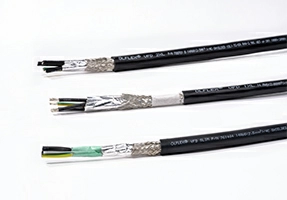
Why Choosing the Right VFD Cable Matters
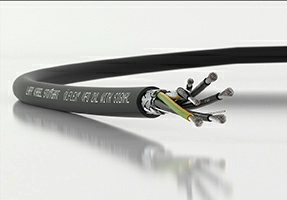
Discover why variable frequency drives need dedicated VFD cables and explore LAPP’s high-performance lineup: ÖLFLEX® VFD Slim, 1XL, and 2XL.
The widespread industrial expansion across various sectors is fueling the extensive use of machinery and equipment, which increasingly depend on variable frequency drives (VFDs) to operate efficiently and effectively. From massive manufacturing plants to sophisticated chemical facilities, VFDs have become indispensable tools for modern engineering.
Diverse industries such as manufacturing, food & beverage, energy storage systems, renewable energy (wind, solar, and grid management), automotive, material handling, wastewater treatment, pulp & paper, chemical, oil & gas, and any application requiring commercial HVAC (heating, ventilation, and air conditioning) are major users of VFDs.
AC motor drives have traditionally been the foundation for industrial automation, primarily valued for their reliability and low maintenance needs. Unfortunately, one of their main drawbacks is inefficient energy consumption; traditional configurations always run at full speed regardless of the workload.
VFDs, when used in conjunction with pumps, fans, and motors in other mechanical systems, directly address this issue by regulating the frequency and voltage supplied to the motor. This allows operators to finely control speed and torque to precisely match real-time load requirements. As a result, VFDs significantly reduce energy use, optimize operating costs, and help organizations meet strict energy-efficiency regulations.
Why is VFD-Specific Cable Required?
While integrating a VFD controller can drastically improve system efficiency, it introduces unique electrical challenges. VFD systems operate in demanding environments that require careful consideration for cabling and electrical connections. Defaulting to standard cabling not specifically designed for VFD applications can lead to system degradation, unexpected downtime, and safety hazards.
VFD systems create a significant amount of electrical noise in the form of:
- Large voltage spikes
- RFI/EMI interference
- Common-mode voltages
- Other disruptive electromagnetic phenomena
Voltage spikes are a particularly critical consideration. Due to the VFD drive’s high-speed pulse-width modulation (PWM) switching technology, system cabling can be subjected to two to three times the source voltage under normal operating conditions. These resultant high voltage spikes can easily exceed a standard cable’s voltage rating, reducing the cable’s structural reliability over time as it endures millions of high-voltage cycles.
Furthermore, these voltage spikes increase with cable length, making longer cable runs highly prone to premature cable failure via wave reflection. Additionally, high-voltage spikes generate both conductive and radiated noise, which can interfere with nearby communications and low-voltage control cables sharing the same tray or conduit. To prevent crosstalk and premature insulation breakdown, a specialized VFD cable is required.
Selecting the Right VFD Drive Cable
Several key criteria must be considered when selecting a VFD cable to ensure long-term reliability:
- Voltage Level: VFD cables are typically rated up to 600V, 1000V, and 2000V. Higher voltage levels directly relate to thicker, more robust cable insulation that effectively resists transient high-voltage spikes.
- Cable Run Length: Long cable runs amplify voltage reflection. Choosing VFD cables offered in specific low-capacitance configurations and construction methods is necessary to mitigate this effect over extended distances.
- Physical Protection: Applications requiring protection from physical harm, oil exposure, or harsh chemicals necessitate special industrial-grade cable jacketing materials.
- Shielding: Robust shielding options (such as combinations of foil and tinned copper braid) are available to contain electromagnetic interference and protect nearby low-voltage or communication cabling.
- Flexibility: Depending on the layout—whether routing through tight enclosures or connecting to moving machine components—the cable’s bend radius and flexibility dictate how easily it can be installed and maintained.
Deep Dive: The LAPP ÖLFLEX® VFD Portfolio
LAPP has engineered its premier family of ÖLFLEX® VFD cables specifically to answer these exact industrial demands. Built to deliver stable power, suppress electrical noise, and protect sensitive equipment in the harshest industrial environments, the ÖLFLEX® lineup features distinct series customized for specific applications.
1. ÖLFLEX® VFD Slim: Maximum Space Savings
When panel space and routing real estate are at a premium, ÖLFLEX® VFD Slim is the ideal choice. This reduced-diameter shielded motor cable is engineered to minimize weight and footprint inside cable trays without sacrificing electrical performance.
- Key Engineering: It is designed with the proprietary LAPP Surge Guard insulation system, which includes a unique semiconductive layer. This layer is purpose-built to withstand nonlinear power distortions and disperse abrupt voltage increases caused by harmonics and wave reflection.
- Protection & Approvals: Features a double-shielded design for superior noise control and is approved for TC-ER (Tray Cable-Exposed Run) applications, eliminating the need for protective conduit in many configurations.
- Industry Fit: Highly resistant to industrial disinfecting solutions, making it an excellent match for the food & beverage, chemical, and pharmaceutical sectors.
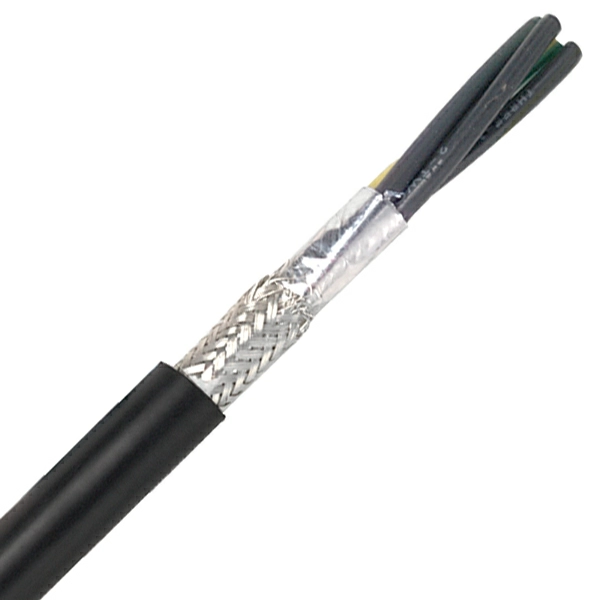
ÖLFLEX® VFD Slim
2. ÖLFLEX® VFD 1XL: Versatile Everyday Performance
The ÖLFLEX® VFD 1XL series represents a robust, highly flexible solution built for seamless routing, excellent electrical balance, and reliable daily operation.
- Key Engineering: Equipped with high-grade XLPE Plus insulation rated for 1000V (UL TC-ER), which offers superior dielectric properties compared to standard PVC-insulated options.
- Protection & Approvals: Encased in an oil-, flame-, and UV-resistant black jacket, this series carries UL TC-ER, c(UL) CIC/TC, and flexible motor supply approvals.
- Configurations: For advanced machine designs, the ÖLFLEX® VFD 1XL with Signal variant embeds a fully shielded pair of control conductors directly alongside the power cores. This allows engineers to run motor power alongside encoder or brake signals in a single cable, streamlining installation and saving physical space.
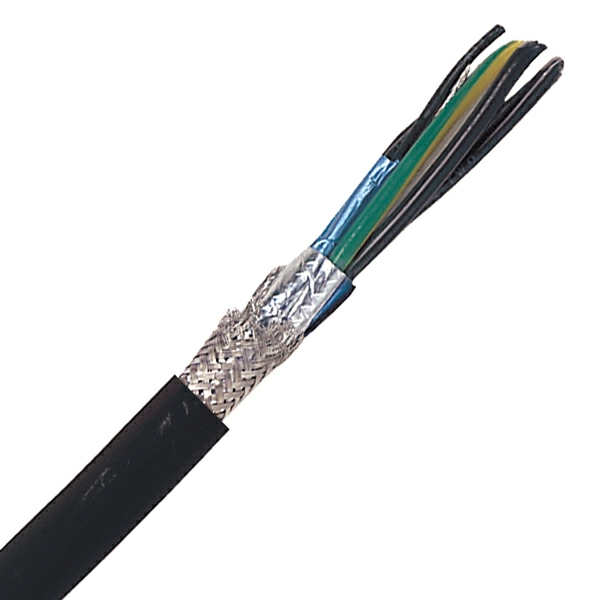
ÖLFLEX® VFD 1XL
3. ÖLFLEX® VFD 2XL: Heavy-Duty, Extended Run Power
For high-output drives, severe electrical environments, or exceptionally long cable runs, ÖLFLEX® VFD 2XL steps up as the heavy-duty power delivery champion.
- Key Engineering: Featuring heavy-walled 2000V XLPE Plus insulation, this cable can withstand twice the dielectric voltage testing of standard VFD cables. This extra insulation barrier delivers the highest level of protection against intense voltage spikes and thermal instability.
- Protection & Approvals: Boasts exceptional crush resistance and mechanical stamina. It is multi-rated for UL & CSA TC-ER, WTTC (Wind Turbine Tray Cable), and flexible motor supply layouts.
- Advanced Noise Control: This tier includes the ÖLFLEX® VFD 2XL Symmetrical option. Designed with a symmetrical grounding geometry, it cancels out common-mode currents at their physical source. This shields sensitive nearby instrumentation and actively prevents common-mode bearing currents from destroying motor bearings over time.
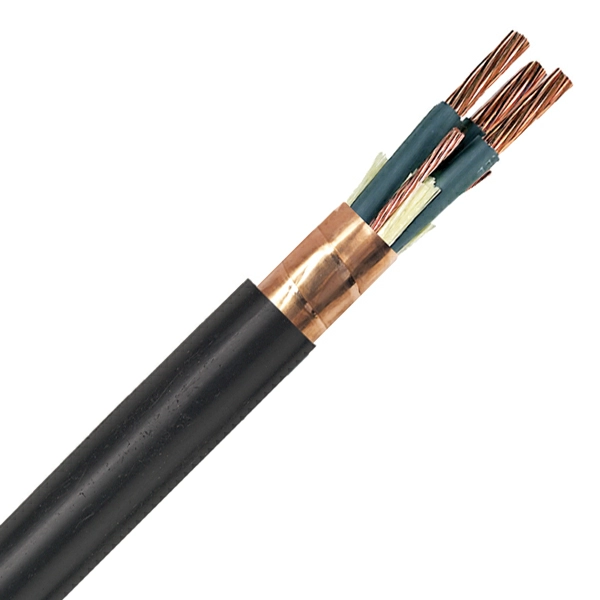
ÖLFLEX® VFD 2XL
Engineering the Reliable VFD Cable “System”
A truly reliable VFD setup cannot be viewed as a collection of isolated parts. Instead, it must be approached as a unified three-part system comprised of the VFD controller, the VFD cable, and the VFD motor, tied together by a robust physical and electrical connection.
To achieve the stringent electromagnetic compatibility (EMC) requirements of industrial facilities, the VFD cable connection must establish a continuous 360° physical and electrical contact at both termination points. Low transfer impedance from the cable's shield to the motor housing and the drive cabinet is essential for proper electrical bonding and grounding. Without this, high-frequency noise will escape, taking alternative paths through factory infrastructure and damaging equipment.
A prime example of an industry-standard shield-terminating accessory is the SKINTOP® Brush series of cord grips. The SKINTOP® Brush is a nickel-plated brass strain relief engineered specifically for demanding EMC applications like VFD installations. It provides a centered, fixed strain relief combined with a liquid-tight and dust-proof seal in one step. Maintenance teams simply insert the cable, push the braided shield under the innovative integrated EMC brush, and tighten the cap. The connection is securely grounded, sealed, and strain-relieved in seconds.
LAPP Tannehill VFD Drive Cable: In-Stock and Ready-to-Ship
Selecting the right VFD cable is only half the battle; getting it delivered on time to keep your project moving forward is just as crucial. LAPP Tannehill is a leading national distributor for hook-up, lead wire, and industrial cables, specializing in rapid fulfillment, high service levels, and the flexibility required to meet the precise demands of modern manufacturing.
- Fast Delivery: We minimize operational downtime by offering same-day pickup or immediate shipment from our strategically located distribution centers across the United States, including Houston, Las Vegas, Minneapolis/St. Paul, and Indianapolis.
- Value-Added Services: We provide highly customizable, tailored options, including precise custom cable cutting and custom put ups designed to match your exact layout requirements.
Don't let inadequate cabling become the weak link in your automation chain. Contact LAPP Tannehill today for all your VFD cabling and accessory needs. Browse our online product selection, request a quote or quick stock check, or speak directly with our application experts by calling us at 800.633.6339.






 RSS Feed