
The New Copper Reality: Why Volatility is the Norm
- Kassie Teagarden
- News and Articles
- Aug 31, 2025
- 1973views
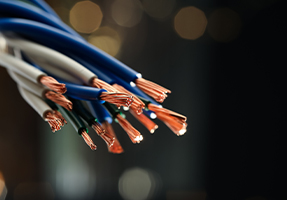
The New Copper Reality: Why Volatility is the Norm
Electrification is driving a copper crisis. Discover the 3 forces—demand, supply, and speculation—making prices volatile and how to manage the risk.
For decades, the price of copper was a reliable barometer of global industrial health—an economic indicator so trusted it earned the nickname “Dr. Copper.” When the global economy manufactured, built, and transported, copper prices went up. When it contracted, they went down. This predictable, cyclical volatility allowed engineers and procurement teams to manage risk based on macro-economic cycles.
That reality is gone.
The current landscape for copper—the foundational metal of modern electrification—is defined by a profound and structural shift. Today's volatility is the result of an unprecedented, non-negotiable surge in demand colliding with an inelastic, geologically constrained supply, all amplified by the pressures of global financial markets.
For original equipment manufacturers (OEMs), contract manufacturers (CMs), and the engineers responsible for product Bill of Materials (BOMs), this new reality is not a risk to be hedged on a quarterly basis. It is a fundamental cost-model crisis that requires a complete paradigm shift in strategic planning, design, and sourcing. Understanding why copper volatility is the new norm is the critical first step in building a resilient supply chain.
This detailed analysis breaks down the three core pillars driving perpetual, sharp price swings in the copper market.
Unstoppable Green Demand Meets Finite Copper Supply
The biggest and most permanent cause of copper price swings is the world’s commitment to decarbonization and electrification. Copper is not just a metal used in green technology; it is the backbone of the entire energy transition.
This new demand is fundamentally different from the cyclical demand of the past for three key reasons:
- 1. It’s Not a Cycle, It’s a Mandate: This demand isn't tied to the regular ups and downs of the economy. It is politically mandated and globally coordinated through government policy, climate targets, and corporate ESG (Environmental, Social, and Governance) commitments.
- 2. Copper Intensity: When we shift from fossil fuels to electric power, we are replacing systems that use almost no copper (like gasoline tanks) with systems that are extremely copper-intensive (like battery packs, charging stations, and grid upgrades).
- 3. A Permanent Price Floor: Because this trend is irreversible and projected to last for decades, it establishes a permanent, high baseline for demand. Any small disruption in supply or spike in economic activity now starts from this high floor, resulting in extreme volatility as the market fights for limited metal.
1.1. Copper as the Essential Electrification Metal
The shift from a carbon-based economy to an electrified one means replacing systems that use almost no copper (like oil pipelines and gas stoves) with systems that are copper-intensive by their very nature (like solar farms and induction cooktops).
The Automotive Revolution: Exponential Copper Density
The starkest example lies in the shift from internal combustion engine (ICE) vehicles to Battery Electric Vehicles (BEVs).
- Internal Combustion Engine (ICE) Vehicle: Typically requires around 51 lbs of copper for wiring, radiators, and minor electronics.
- Battery Electric Vehicle (BEV): Requires an average of 183 lbs of copper, a more than 300% increase per unit. This copper is used in the battery, the motor windings, inverters, and high-voltage cabling.
This dramatic increase in copper intensity means that every unit of global auto production converted to electric is a multiple-fold increase in copper demand, a geometric curve that current mining capacity cannot match. Furthermore, the infrastructure necessary to support these vehicles—charging stations—adds further strain, with fast chargers requiring substantial quantities of the metal.
>> Read more on Wiring for EV Infrastructure: What You Need To Know
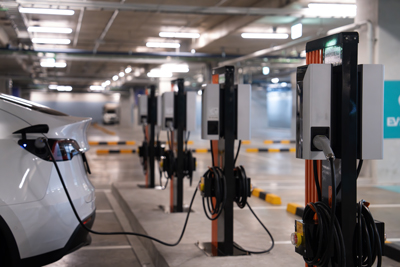
The Renewable Grid: The Density Challenge
Renewable energy sources like wind and solar are inherently copper-intensive because they are energy-diffuse—they require vast networks to collect and transmit energy compared to a centralized fossil fuel plant.
- Wind Turbines: A single onshore wind turbine can use 3 to 4.7 tons (6,000 to 9,400 lbs) of copper, primarily in the generator, transformer, and power cables.
- Solar Farms: Photovoltaic installations require significant copper for inverters, grounding, and array wiring.
- The Grid Overhaul: Critically, the intermittent nature of renewables demands a massive upgrade to the electric grid for storage and transmission. Modernizing and expanding grid infrastructure—the single largest consumer of copper globally—to handle bi-directional power flow and distributed generation is a decades-long project that will require millions of tons of new copper cabling, transformers, and switchgear.
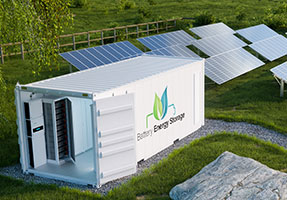
>> Read more on Energy Storage System Solutions for Electrification
The Digital Spine: Data Centers and AI
Beyond electrification, the exponential growth in data and artificial intelligence (AI) is creating a new, intense source of demand. AI’s power requirements necessitate massive, high-density data centers. Copper is essential for power distribution units (PDUs), specialized cooling systems, and high-speed data transmission lines within and between servers. The push for greater computing power, which is doubling every few years, directly correlates to a sharp increase in the copper intensity per computing unit.
1.2. The Inevitable Deficit
The convergence of these macro-trends means demand is projected to consistently outstrip supply for the foreseeable future, creating an enduring supply deficit. Analysts forecast a deficit of 300,000–500,000 metric tonnes by the end of 2025, with the gap widening to a potential 30-40% shortfall by 2035 under ambitious Net Zero scenarios (Shangai Metal Market).
Because demand is structurally higher than supply, even minor changes in mine output or investor mood get magnified into dramatic price surges. This turns copper’s typical, steady price trend into a wildly volatile market.
2. The Constrained Supply Reality: Geologic and Geopolitical Frictions
While the demand side is expanding exponentially, the supply side is fundamentally inelastic, meaning it cannot react quickly or reliably to price signals. This is due to three immutable constraints: geology, time, and jurisdiction.
2.1. The Geologic Bottleneck: Declining Copper Ore Grade
The world's richest, most accessible copper deposits have been mined for decades. The challenge for modern miners is not just finding new deposits, but dealing with significantly lower ore grades in existing and new mines.
- The Trend: The average copper ore grade has declined by approximately 40% since 1991. Future undeveloped projects have a weighted average grade of only 0.45% copper, significantly lower than the historical average of above 0.6% (BHP Insights).
- The Cost-Production Feedback Loop: Lower-grade ore is not a minor inconvenience; it fundamentally alters the economics of mining. To produce the same amount of refined copper, miners must:
- Move More Earth: Process exponentially larger volumes of rock.
- Consume More Energy: The crushing, grinding, and concentration processes become more energy-intensive per unit of final metal.
- Use More Water: Water usage skyrockets, leading to operational constraints in arid mining regions.
This means that even when copper prices are high, it costs more, takes more time, and requires a greater environmental footprint to bring new supply to market, raising the marginal cost of production and creating a higher floor for price volatility.
2.2. The Time Lag: The 18-Year Problem
New copper supply cannot be simply "turned on." The process of discovering a major ore body and bringing it to full commercial production is one of the longest industrial timelines in the world.
- The Staggering Reality: The average time from the initial discovery of a copper deposit to the start of commercial production is now nearly 18 years, an increase of almost three times the timeline seen in the 1990s.
- The Bottlenecks: This multi-decade timeline is consumed by:
- Exploration & Feasibility (5-7 years): Rigorous drilling, testing, and economic modeling.
- Permitting & Regulatory Approval (5-10+ years): Environmental reviews, community consultations, and securing government licenses have become exponentially more complex and time-consuming globally.
- Construction (3-5 years): Building the mine, concentrator, and necessary infrastructure.
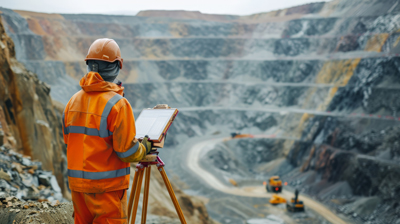
This massive lag means that even if a supply shortage is evident today, any new mine started tomorrow will not relieve market pressure until the late 2040s. This complete lack of short-term supply elasticity ensures that demand shocks translate directly and instantly into price shocks.
2.3. Geopolitical and Operational Instability
A significant portion of the world's copper supply is geographically concentrated in regions with high political and operational risk.
- The Chilean and Peruvian Dominance: Chile and Peru alone account for nearly 35% of the world's mined copper. Both countries face significant domestic challenges, including social unrest, labor strikes, water rights disputes, and the constant threat of royalty or tax changes by new governments seeking a greater share of mining profits.
- Unplanned Disruptions: Unforeseen events, from environmental accidents to labor actions, can now wipe out hundreds of thousands of tons of expected supply—a catastrophic blow in a market already struggling with a deficit. Recent major disruptions at single, large-scale mines have been sufficient to single-handedly flip projected market surpluses into sudden, deep deficits, leading to immediate, sharp price rallies. Industry data shows an upward trend in unplanned production disruptions, further embedding instability into the supply chain.
3. The Investor Effect: How Financial Markets Amplify Copper Prices
If structural demand and constrained supply provide the foundation for volatility, the financial markets provide the accelerant. Copper has evolved from a pure industrial commodity into a macro financial asset, traded by global hedge funds and institutional investors on exchanges like the London Metal Exchange (LME) and COMEX.
3.1. The Speculative Component: Paper vs. Physical
The volume of "paper copper"—futures contracts, options, and exchange-traded funds (ETFs) that track copper prices—often dwarfs the volume of physical copper being consumed.
- The Trader's View: For financial players, copper is a bet on the global economy, the U.S. dollar, and the energy transition, not a raw material for a circuit board. Their trading decisions are based on macro-economic data (interest rate forecasts, Chinese PMI data, global inflation), not on plant operational schedules.
- Amplified Price Swings: Large, institutional capital flows can rapidly enter or exit the market based on a single central bank announcement or geopolitical headline. This investor interest adds a new level of volatility that has nothing to do with the actual physical balance of supply and demand. As a result, price swings are often sharp, driven more by market sentiment (traders' feelings) than by how much copper is actually being produced at the smelters.
3.2. Inventory—The Volatility Multiplier
The key point of friction between paper and physical copper is the level of metal stored in exchange-certified warehouses.
- Low Inventories: Global exchange-monitored inventories (LME, COMEX, SHFE) are often at historic lows relative to global demand. This lack of a sufficient buffer stock is critical.
- The Squeeze: When physical demand spikes (e.g., from a massive new grid project) and visible inventories are low, the market is vulnerable to a "short squeeze." Traders who have bet on lower prices are forced to buy contracts or secure physical metal, sending prices vertical in a matter of days or hours. Even small inventory drawdowns can trigger outsized price reactions, creating a highly reactive and volatile pricing environment.
- Invisible Inventories: Price action is often further complicated by invisible inventories—copper held directly by producers or consumers outside of public exchanges. When these hidden stockpiles are drawn down, it is a lagging indicator that only confirms market tightness after a major price spike has already occurred.
3.3. The "Dr. Copper" Paradox and Currency Dynamics
The very strength of copper as an economic indicator—"Dr. Copper"—now contributes to its volatility.
- Global Health Proxy: Copper's reputation as a reliable economic predictor means it is often the first asset bought or sold on news of a major economic shift (e.g., Chinese stimulus). This front-running behavior ensures that any macro-economic uncertainty is immediately reflected in the copper price, making it highly sensitive to global events far removed from the actual electronics manufacturing or construction industries.
- USD Correlation: Copper is priced in U.S. dollars. When the dollar weakens, it takes more dollars to buy an ounce of copper, pushing the price up, and vice versa. As central banks around the world wrestle with inflation and interest rates, the resulting currency volatility is directly—and sometimes violently—translated into copper price volatility.
4. The Procurement and Engineering Imperative: Translating Volatility into Strategic Risk
For OEMs and CMs, the new copper reality is not an abstract financial phenomenon; it is a direct threat to profitability and operational stability.
The volatility caused by this three-pillar confluence—Structural Demand, Inelastic Supply, and Financial Amplification—translates into two primary forms of risk for industrial users:
4.1. The Cost-Model Breakage Risk
For businesses that plan on multi-year product cycles (e.g., 5-10 years for industrial equipment or automotive components), sudden copper price surges can instantly render their established cost models obsolete.
- Margin Erosion: A sharp, rapid increase in copper prices can compress margins on existing contracts, especially those with fixed-price agreements, turning a profitable product into a loss leader overnight.
- Repricing Failure: Procurement teams are forced to scramble to reprice components, leading to friction with customers and instability in long-term supply agreements. When volatility is the norm, the ability to negotiate and secure stable, forward-looking metal pricing becomes the single most valuable competence in the procurement function.
4.2. Working Capital and Inventory Exposure Risk
Contract Manufacturers and large-scale OEMs hold significant copper in the form of raw wire, copper foil, PCB laminates, and finished components.
- Inventory Loss/Gain: Sudden price drops can lead to massive inventory write-downs, as the cost of the existing stock on the balance sheet now exceeds the lower market price. Conversely, rapid price spikes can necessitate immediate, unanticipated increases in working capital to purchase inventory before the next price surge. This requires a significant cash buffer and can strain liquidity.
- The Design Dilemma: Engineers must balance the high cost of copper with the need for high performance. There's a strong temptation to replace copper with cheaper materials, but because copper is the best conductor, doing so almost always means sacrificing efficiency or compact size in advanced applications. The new priority is Copper Intensity Reduction (CIR). This requires engineers to rigorously justify and minimize every gram of copper used in a product, demanding unprecedented collaboration between the design (engineering) and purchasing (procurement) teams.
In the new copper reality, price stability is a historical anomaly, and volatility is the defining feature of the market. Navigating this environment requires moving beyond simple purchasing and embracing a holistic strategy that integrates design, sourcing, and financial hedging. For professionals in manufacturing industries, recognizing this paradigm shift is the foundation of building a truly resilient supply chain for the electrified future.
How LAPP Tannehill Can Help You
The copper market has fundamentally changed. The structural forces of electrification, compounded by aging mines and amplified by financial markets, create a high-volatility environment where reliable supply is a competitive advantage.

As Brian Arickx, our Sr. Director of Supply Chain & Customer Operations puts it:
“The structural squeeze on copper supply means we can't afford to be just a transaction partner. We see copper volatility as an opportunity to work closer with our customers on material planning and engineering design. Our value is translating complex market trends into a stable, cost-effective supply chain for your products.”
In this new reality, simply buying cable is not enough; you need a strategic partner. LAPP Tannehill is positioned not just as a distributor, but as a valued partner, ready to help your projects remain on schedule and within budget, even as “Dr. Copper's” pulse races. Contact us today.
Related Posts

Categories
Recent Posts





 RSS Feed